Real Estate naturally must adopt a proactive, holistic approach to mitigate environmental risks posed by climate change. Key strategies include detailed risk assessments using GIS for resilient infrastructure, integrating green design principles, and collaboration between stakeholders. Policy incentives like tax breaks and stricter building codes encourage sustainable practices, fostering community safety and long-term ecological conservation. Upfront investments in resilience lead to reduced costs and higher property values, aligning with growing consumer demand for eco-friendly solutions.
Environmental threats pose significant challenges to our planet and communities, demanding innovative solutions. In this article, we delve into the critical aspect of reinforcing structures to mitigate these threats, with a particular focus on real estate. The rapid pace of urbanization, coupled with climate change, has exacerbated vulnerabilities in our built environment. We explore cutting-edge strategies and technologies that can bolster infrastructure resilience, ensuring the safety and sustainability of our cities and towns. By harnessing expertise and drawing from successful case studies, we aim to provide actionable insights for professionals seeking to navigate this complex landscape.
Assessing Environmental Risks in Real Estate

Assessing environmental risks is a critical component of responsible real estate practices. In an era where climate change exacerbates natural hazards, developers, investors, and policymakers must integrate robust environmental risk assessment into their decision-making processes. This involves scrutinizing factors like flood zones, air quality, soil contamination, and vulnerability to extreme weather events, all of which significantly impact property values and long-term sustainability. For instance, a recent study by the National Association of Realtors (NAR) revealed that properties in high-risk flood zones experienced a 7-12% decrease in value compared to similar properties in lower-risk areas.
Real estate naturally intersects with these environmental challenges, making it imperative for stakeholders to adopt a proactive approach. Experts recommend integrating Geographic Information Systems (GIS) and advanced data analytics to create detailed environmental profiles of potential development sites. These tools enable the identification of historical and current environmental hazards, facilitating informed decisions. For example, developers in coastal areas are increasingly utilizing GIS mapping to assess sea-level rise and its potential impact on infrastructure and property lines, enabling them to design more resilient buildings and infrastructure.
Moreover, engaging with local communities and environmental agencies is vital. Collaborative efforts can lead to the implementation of sustainable practices that mitigate risks and enhance the long-term viability of real estate projects. Policy incentives, such as tax breaks for green buildings and renewable energy adoption, also play a significant role in encouraging developers to prioritize environmental stewardship. By embracing comprehensive risk assessment and adopting innovative solutions, the real estate sector can navigate environmental threats, ensuring the health and safety of communities while securing a sustainable future.
Implementing Sustainable Mitigation Strategies
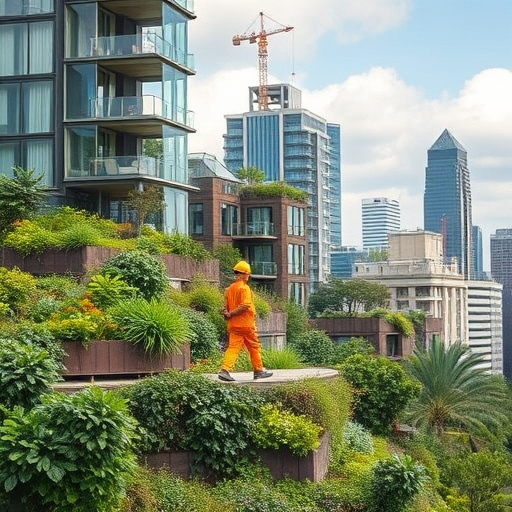
In the face of escalating environmental challenges, reinforcing structures to mitigate threats in the real estate sector is no longer an option but an imperative. Sustainable mitigation strategies, when implemented robustly, can significantly reduce the ecological footprint of buildings and urban areas. Experts emphasize that a holistic approach, integrating design, construction, and operational practices, is crucial for achieving environmental sustainability. For instance, green roofs and walls not only enhance biodiversity but also serve as natural insulation, reducing energy consumption. According to a study by the U.S. Green Building Council, buildings that incorporate sustainable features can reduce water consumption by up to 50% and greenhouse gas emissions by 70%.
Practical insights from leading real estate developers and architects reveal that designing for sustainability starts with location. Choosing sites with pre-existing ecosystems or incorporating green spaces within developments fosters a harmonious relationship with the environment. Additionally, leveraging natural materials and incorporating energy-efficient technologies are proven strategies. For example, the use of recycled materials in construction and smart HVAC systems can drastically lower a building’s carbon footprint. Developers should also consider implementing water harvesting systems and promoting rainwater infiltration to reduce strain on municipal supplies.
Beyond individual projects, policy interventions play a pivotal role in driving sustainable practices across the real estate sector. Governments can incentivize developers to adopt eco-friendly methods through tax breaks, subsidies, and regulatory frameworks. Moreover, collaboration between stakeholders—including developers, architects, and environmental agencies—is essential for creating integrated solutions. By sharing best practices, conducting regular audits, and setting ambitious but achievable goals, the real estate industry can contribute significantly to environmental conservation while meeting the growing demand for housing and commercial spaces.
Long-Term Planning for Resilient Structures

In the face of escalating environmental challenges, the real estate sector must embrace long-term planning to ensure the resilience of structures. This involves a holistic approach that considers not just immediate construction, but also future-proofing buildings to withstand evolving threats such as extreme weather events, rising sea levels, and climate variability. A key strategy is integrating sustainable design principles from the outset, from energy-efficient systems to adaptive materials capable of repelling natural disasters. For instance, the adoption of resilient roofing systems, such as green roofs or reflective coatings, can mitigate urban heat islands and reduce the impact of intense rainfall.
Long-term planning necessitates collaboration between architects, engineers, and urban planners, coupled with proactive engagement from policymakers. Governments can play a pivotal role by enacting regulations that incentivize the use of sustainable materials and design practices, while also providing subsidies for retrofitting existing structures to enhance their resilience. A successful example is seen in coastal cities like Amsterdam, where strict building codes and strategic land-use planning have significantly improved infrastructure resistance against rising sea levels and intense storms. This collaborative and future-oriented approach not only safeguards real estate investments but also ensures the well-being and resilience of communities.
To achieve true resilience, real estate developers and property owners must embrace a long-term mindset, often requiring significant upfront investment. However, the benefits extend far beyond the initial costs, encompassing reduced insurance premiums, lower operational expenses, and enhanced property values. Additionally, embracing sustainable practices aligns with growing consumer demands for eco-friendly options, positioning developers as leaders in the industry. By prioritizing resilience, the real estate sector can contribute to global sustainability efforts while securing a stable and prosperous future.